Bitcoin, Why America Hasn't Started Buying for Its Strategic Reserve
Need articles like this for your video? They help promote it on YouTube and Google — order them in the Telegram bot @sat_sit_bot. Articles with your video embedded are written and posted by the bot itself — on popular topical sites (no ads). Your first 50 articles are free.
· based on the channel Simply Bitcoin
Bitcoin has not been bought for the US strategic reserve because no federal agency has been given money to buy it. The reserve exists on paper, created by executive order, but it is stocked only with coins the government already seized in criminal and civil cases. Until Congress appropriates funds or the Treasury finds a budget-neutral mechanism, the United States will hold bitcoin without ever entering the market as a buyer.
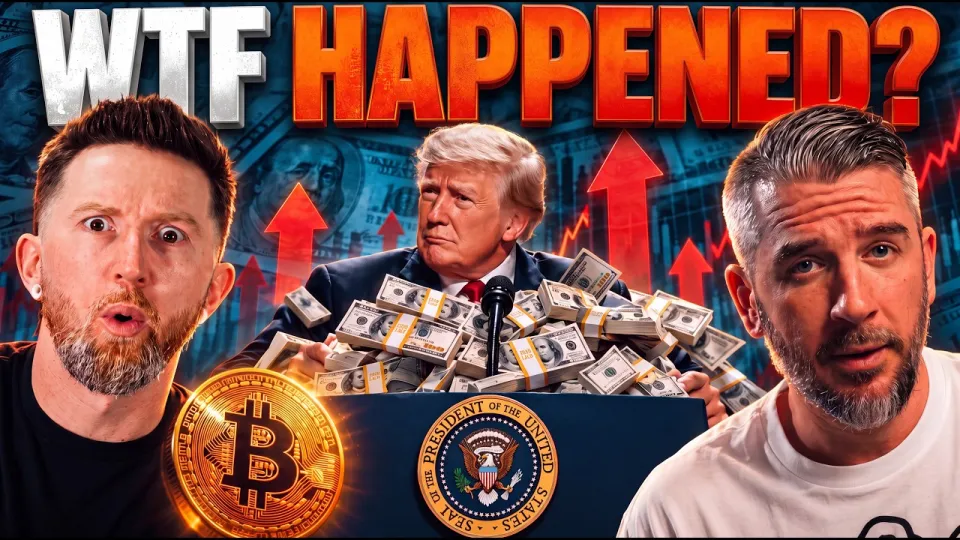
That distinction — holding versus accumulating — is the core of a discussion on Simply Bitcoin's After Hours format, where the hosts spend most of the episode separating what the executive order actually says from what the market assumed it said.
What the US strategic Bitcoin reserve actually contains
The reserve is a stockpile of forfeited assets, not a purchase program. When the order was signed, the government consolidated bitcoin already in federal hands — primarily from cases like Silk Road and other seizures — into a single accounting bucket. Nothing in that mechanism authorizes the Treasury or any other agency to convert dollars into bitcoin at market prices.
The practical consequence is that the reserve's size changes only when the government wins a forfeiture case. It does not grow when the price falls and does not grow when officials talk positively about the asset. The panel returns to this point repeatedly, noting that headlines describing a "US Bitcoin reserve" have described an inventory, not a buyer.
A second constraint sits on the other side of the ledger: the coins cannot easily be sold either. Disposing of forfeited property at scale requires legal process, and the order explicitly frames the reserve as a long-term strategic holding. That creates an odd equilibrium — the government has locked up supply it never chose to acquire.
Why no agency has a budget line for Bitcoin
The bottleneck is appropriations, not ideology. Federal agencies spend what Congress authorizes them to spend, and no line item exists for digital asset accumulation. A department that wanted to buy bitcoin would have to explain under which statute it was spending the money and how the asset would be valued on its balance sheet.
That accounting question is harder than it sounds. Bitcoin has no sovereign issuer, no maturity, and no cash flow, so existing government accounting frameworks have no clean category for it. The hosts argue this is where most of the real resistance lives — inside treasury and budget offices rather than in public statements from politicians.
Their proposed workarounds are all budget-neutral in nature:
- Revalue the government's gold certificates, which are carried on the books at a historic price far below market, and direct the difference into bitcoin.
- Use proceeds from asset forfeiture funds that already exist.
- Redirect a small share of existing digital asset enforcement revenues.
Each option avoids a new appropriation, which is precisely why the panel treats them as the realistic route to a first purchase rather than a straight congressional vote.
The political calculation behind the delay
Buying bitcoin is easy to attack and hard to defend in a press conference. If the price falls after a government purchase, the decision becomes a headline about lost public money; if it rises, critics call it market manipulation. The panel frames this asymmetry as the dominant reason officials prefer to sound supportive while doing nothing operational.
There is also the question of who owns the decision. A single agency acting alone would be exposed politically, so any serious purchase would likely need coordination between the Treasury, the White House, and relevant committees. That coordination has not happened, and the episode's central claim is that the delay is a choice about political risk rather than a legal impossibility.
The discussion at 12:40 makes the point bluntly: the executive order removed the threat of the government selling its coins, but it never promised to buy more. Supporters who read the order as a purchase mandate confused permission with funding.
Questions viewers keep raising about the reserve
Viewers of the episode repeatedly push on the same practical doubts, and they are worth answering directly rather than dismissing.
Does the reserve mean the US is now a bitcoin holder? Yes, but only of coins obtained through seizures. The government's position is real and verifiable in forfeiture records; what is missing is any market purchase.
Could the government sell and crash the price? Legally it is possible, but the order's design makes a large discretionary sale unlikely without a policy reversal. The more relevant risk for holders is not a sale but the absence of buying.
Is this just a talking point for politicians? Partly. The reserve gives officials a way to signal friendliness to the industry at zero fiscal cost. That is exactly why the panel insists on watching appropriations language rather than speeches.
What would actually change things? A budget-neutral funding mechanism attached to a real agency with real authority — the gold certificate revaluation being the most frequently discussed candidate.
The hosts also spend time on tone, and the audience responds to it: the contrast between one host's intensity and another's measured delivery keeps a technical subject watchable. As one commenter put it, the format works because the intensity is balanced by calm.
What would have to happen before the first purchase
A first government purchase requires three things to line up: a funding source that does not need a new appropriation, an agency willing to own the execution, and a valuation method that survives an audit. The panel treats the third as the most underrated obstacle, because auditors need a defensible price for an asset that trades around the clock on dozens of venues.
At 31:15 the conversation turns to custody. Any purchase would need a storage arrangement that satisfies federal security requirements, and the government's existing seizure wallets are not built for active acquisition. Custody design, not ideology, could add months to the timeline even after funding is agreed.
Finally, there is the question of scale. A symbolic purchase of a few thousand bitcoin would move no needle and invite the same political criticism as a large one, which pushes any serious program toward a size that requires genuine institutional planning. That is another reason the panel expects the first step to be announced as part of a broader fiscal maneuver rather than as a standalone bitcoin policy.
Summary
The US strategic Bitcoin reserve exists, but it is a lock on seized coins rather than a buying program, and no agency currently has the budget authority to add to it. The blockers are appropriations, accounting standards, and political risk — not a lack of legal permission. Budget-neutral routes, especially revaluing gold certificates, remain the most plausible path to a first purchase. Simply Bitcoin's breakdown is useful precisely because it separates the executive order's actual text from the market's optimistic reading of it, and the episode's closing argument is that watching budget documents will tell you more than watching speeches.
FAQ
Is the US strategic Bitcoin reserve funded?
No. It holds bitcoin the government already owned through forfeiture, and no appropriation exists for buying more. Any purchase would need either congressional funding or a budget-neutral mechanism such as revaluing gold certificates.
Can the government sell the bitcoin in the reserve?
Legally it retains disposal authority over forfeited assets, but the order frames the reserve as a long-term strategic holding, so a large discretionary sale would be a policy reversal rather than routine housekeeping. The bigger practical risk for holders is continued inaction on buying.
Why doesn't the Treasury just buy bitcoin with existing funds?
Because agencies cannot redirect money to a new asset class without legal authority and an accounting treatment that survives audit. Bitcoin has no issuer or cash flow, so federal valuation rules have no ready category for it, which pushes any program toward budget-neutral designs.
What should investors watch to know if purchases are coming?
Appropriations language, Treasury statements about gold certificate revaluation, and any announcement of a custody arrangement. Public enthusiasm from officials is a weak signal; funding mechanisms and audit-ready valuation rules are the real indicators.
Key takeaways
- The US strategic Bitcoin reserve was created by executive order and holds only coins seized in criminal cases, not open-market purchases.
- No federal agency has been given a budget line to buy bitcoin, so the Treasury has no appropriation to spend.
- Selling the seized coins would require congressional approval, which is why the reserve functions as a lock rather than an accumulation program.
- The podcast panel argues the real blocker is political caution and accounting rules, not a lack of legal authority.
- Budget-neutral strategies — such as reallocating existing gold certificates or asset forfeiture proceeds — are the most likely path to actual purchases.
Source: LEAKED: Here's The REAL Reason America Hasn't Bought Bitcoin For its Strategic Reserve... · Markdown version
Questions & answers
Is the US strategic Bitcoin reserve funded?
No. It holds bitcoin the government already owned through forfeiture, and no appropriation exists for buying more. Any purchase would need either congressional funding or a budget-neutral mechanism such as revaluing gold certificates.
Can the government sell the bitcoin in the reserve?
Legally it retains disposal authority over forfeited assets, but the order frames the reserve as a long-term strategic holding, so a large discretionary sale would be a policy reversal rather than routine housekeeping. The bigger practical risk for holders is continued inaction on buying.
Why doesn't the Treasury just buy bitcoin with existing funds?
Because agencies cannot redirect money to a new asset class without legal authority and an accounting treatment that survives audit. Bitcoin has no issuer or cash flow, so federal valuation rules have no ready category for it, which pushes any program toward budget-neutral designs.
What should investors watch to know if purchases are coming?
Appropriations language, Treasury statements about gold certificate revaluation, and any announcement of a custody arrangement. Public enthusiasm from officials is a weak signal; funding mechanisms and audit-ready valuation rules are the real indicators.